

Welcome to SNAP Studio!
Snap Studio is where design meets play – a hands-on series of 6 mini design challenges that blends learning, creativity, and social engagement. Each of the short engagements invites you to explore, imagine, and design for change. Each SNAP engagement blends creativity, curiosity, and social impact to bring together real design themes. This also allows participants to gain early access to the BAC ecosystem and join a community of curious minds who believe design can make a difference.
How it all SNAPS together
Submission Process
Step 1: Watch the Prompt video on YouTube: https://youtu.be/iv0ndvK2LSY
Step 2: Put down your idea as a response in any medium of your choice. This could be a sketch, a model, or an Instagram reel/story/post
Step 3: Share it with the world by
uploading it to Instagram as a story/post/reel on your handle
tagging @acedge.in, @thebacboston, and your Institution handle.
Mandatory hashtags: #SnapStudio #BACxAcedge #designforall
Other hashtags that you could add to your upload to increase outreach would be #ConstructionSafety #DesignForDignity #HumanCenteredDesign #DesignWithPurpose #DesignForImpact
Filling out a google form so we get your name right for certificates and for ease of streamlining submissions.
In case a participant chooses not to participate via social media, they can fill out the Google form only and submit their work. Project-relevant images will be shared by the organisers on social media platforms only if consent is given by the participants in the Google form.

THEMES FOR THE SNAP PROMPTS
-
Universal Design / Accessibility
-
Sustainability / Climate Justice
-
Traditional Wisdom
-
Design Literacy
-
Affordable Design
-
Social Justice
CONTEXT
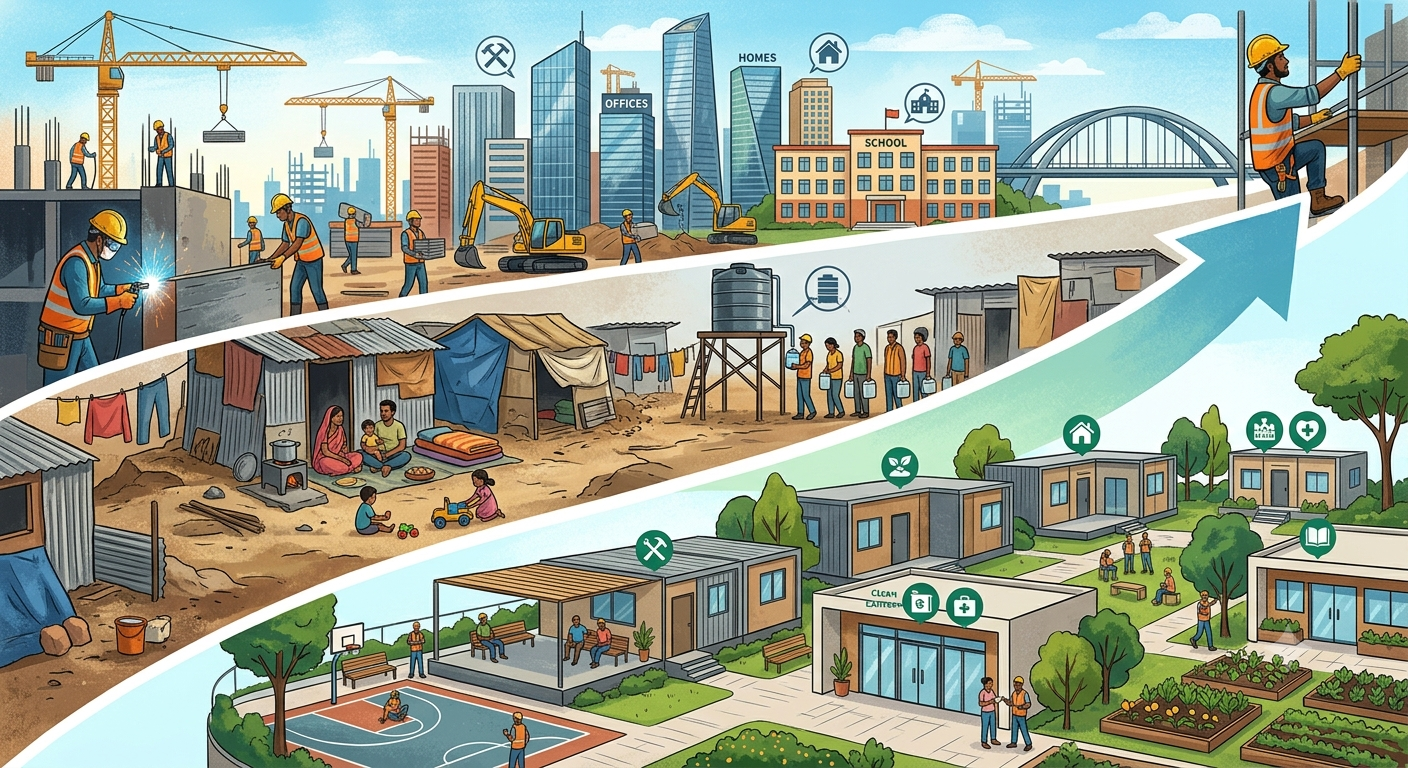
Construction workers build the homes, offices, schools, and cities we live in—yet the people who create these spaces are often left with temporary, unsafe, and undignified living and working conditions on construction sites. Entire families sleep under tin sheets, workers endure extreme heat waves with little relief, safety measures are often inadequate, access to clean sanitation and drinking water is limited, and recreational spaces for rest and well-being are almost non-existent. They dedicate their hands to building a better future for us. Now it is time for you to give back to the hands that build.
Design Prompt
Create a product, system, space, or service that meaningfully improves the daily lives of construction workers on-site. Your solution could be a simple recreational tool that brings moments of joy during breaks, a cooling device that helps with extreme heat, an affordable safety equipment system, a quickly installable shelter or resting space, or any innovation that enhances their dignity, comfort, health, safety, or well-being at work or at the place they call their temporary home.
The solution should be practical, affordable, easy to deploy, and capable of making a real difference in the everyday lives of construction workers and their families.
Anthony Merola on Social Justice for Snap Studio Prompt 6:Design For The Hands That Build
About BAC
The Boston Architectural College began as a professional club in 1889. In 1971, they became the first accredited architecture program with a work component in the US. Since then, they have introduced programs in interior architecture, landscape architecture, and design studies.

About Ethos | Acedge | Arcause
In the dynamic world of architecture, design, and construction (ACED), staying updated with the latest techniques and materials is crucial. Ethos | Acedge has been at the forefront of providing quality education and nurturing young talents in the industry since 2017, while Ethos has been working on outside-the-classroom efforts since 2002. With a mission to instill essential human values alongside professional skills, Acedge has emerged as a trusted online education platform for architects and designers across the country.
